What to say when solo travel situations suddenly get uncomfortable.
Word-for-word scripts and step-by-step checklists for the moments solo travelers actually face: airport arrivals, hotel check-in, unwanted attention, transport situations, and the “what do I do now?” moments.
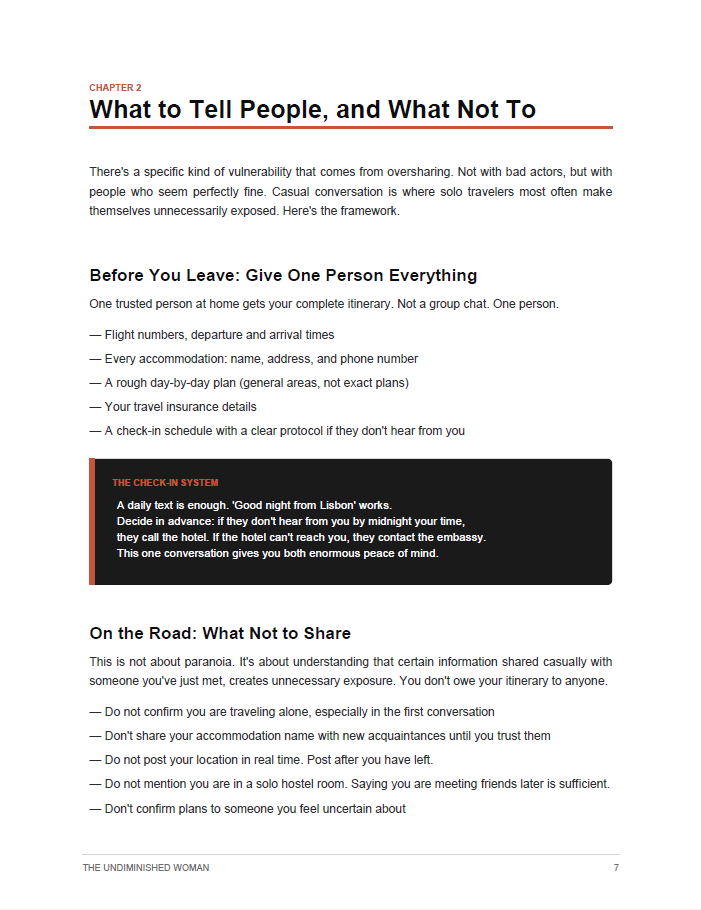
- ✓First 30 Minutes Protocol for airport arrivals + transport.
- ✓5-Level Response Ladder (what to say + when to escalate).
- ✓Word-for-word scripts for “won’t leave me alone” situations.
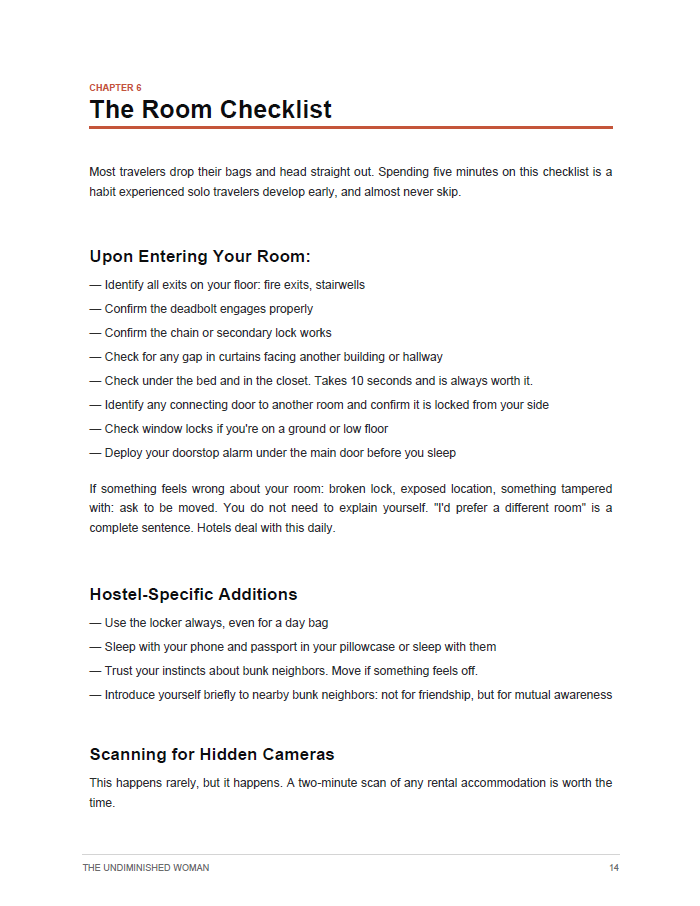
- ✓Room checklist + phone/privacy checklist + evening safety rules.
- ✓Lost / phone / unwell checklists (step-by-step).
- ✓5 printable appendices you can pack + use.
Get the Solo Travel Safety System Bundle for $47.
- Solo Travel on Your Own Terms
- Solo Travel Script Pack
- Solo Trip Planner
What readers are saying
“The airport arrival checklist helped me the first night I landed in Rome. I was tired and second-guessing everything. Having a step-by-step plan on my phone made me feel much more in control.”
“I used one of the scripts when a man at a train station kept asking where I was staying and whether I was alone. It gave me a simple way to shut it down without freezing.”
“The hotel room checklist caught a few things I normally would have ignored. I used it on a solo work trip, and it made me feel calmer the whole first evening.”
Airport. Late at night. You’re waiting for your ride.
Someone starts asking where you’re staying.
- Do you stay polite?
- Do you walk away?
- Do you say something that shuts it down immediately?
Inside the guide, you’ll see the exact words to use.
Why this is different
Most safety advice is vague. This is built for the exact moments you can’t predict — when you’re tired, stressed, and need your next move fast.
- Actual words to use in real situations
- Clear escalation steps when “no” isn’t enough
- A system that works together (scripts + checklists)
- Made to reference on your phone under stress
A quick look inside
Designed to be read once before a trip, then used as a quick reference while traveling.
- The 5-Level Response Ladder
- First 30 Minutes After Landing
- Hotel Check-In & Room Checklist
- Handling Unwanted Attention
- When Someone Won’t Leave You Alone
- If You Feel Followed
- If Your Phone Dies
- If You Get Sick / Unwell
- If You Lose Your Wallet
- Emergency Next-Step Protocol
- Document Vault Template
- Travel Day Checklist
- Room Safety Checklist
- Emergency Contacts Setup
- Quick Reference Scripts
How you’ll use it
You read it once before your trip, then keep it on your phone as a reference. The appendices are designed to be printed and packed.
- Build your Document Vault (20 minutes)
- Set up phone + offline maps + ICE contact
- Research airport transport before you land
- Set a check-in protocol with one trusted person
- Run the 30-minute arrival checklist
- Use the room checklist on check-in
- Pick a ladder level and use the script
- Follow “lost / phone / unwell” checklists if needed
This is for you if…
You don’t want vague advice. You want a plan you can follow under stress.
- You have a trip coming up and want to feel prepared
- You want scripts for unwanted attention
- You want systems, not “be aware” advice
- You don’t want to minimize your trip to feel safe
- You want restaurant lists and attraction itineraries
- You want a “safe destinations” roundup
- You’re traveling in a group the entire time
About this guide
This was created after noticing that most solo travel safety advice stops at “be aware” or “trust your gut.” The goal here is simpler: give clear scripts and step-by-step checklists for the moments where you feel unsure, pressured to be polite, or you just need your next move fast.
FAQ
What do I get?
39-page PDF + 5 printable appendices. Mobile friendly.
What’s in the bundle?
The bundle includes Solo Travel on Your Own Terms, Solo Travel Script Pack, and Solo Trip Planner for $47.
Is this only for first-time solo travelers?
No. Beginners benefit most from the protocols, and experienced travelers still use the ladder + scripts.
Can’t I just Google this?
You can find pieces. This is the system built to work together — the part that matters when you’re tired,
disoriented, and need your next move fast.
Is this therapy?
No. It’s scripts, checklists, and step-by-step plans.